
Loading…
Tecovas grew fast on product and brand. We started with twenty customers to learn where the experience could serve them even better.

The brand
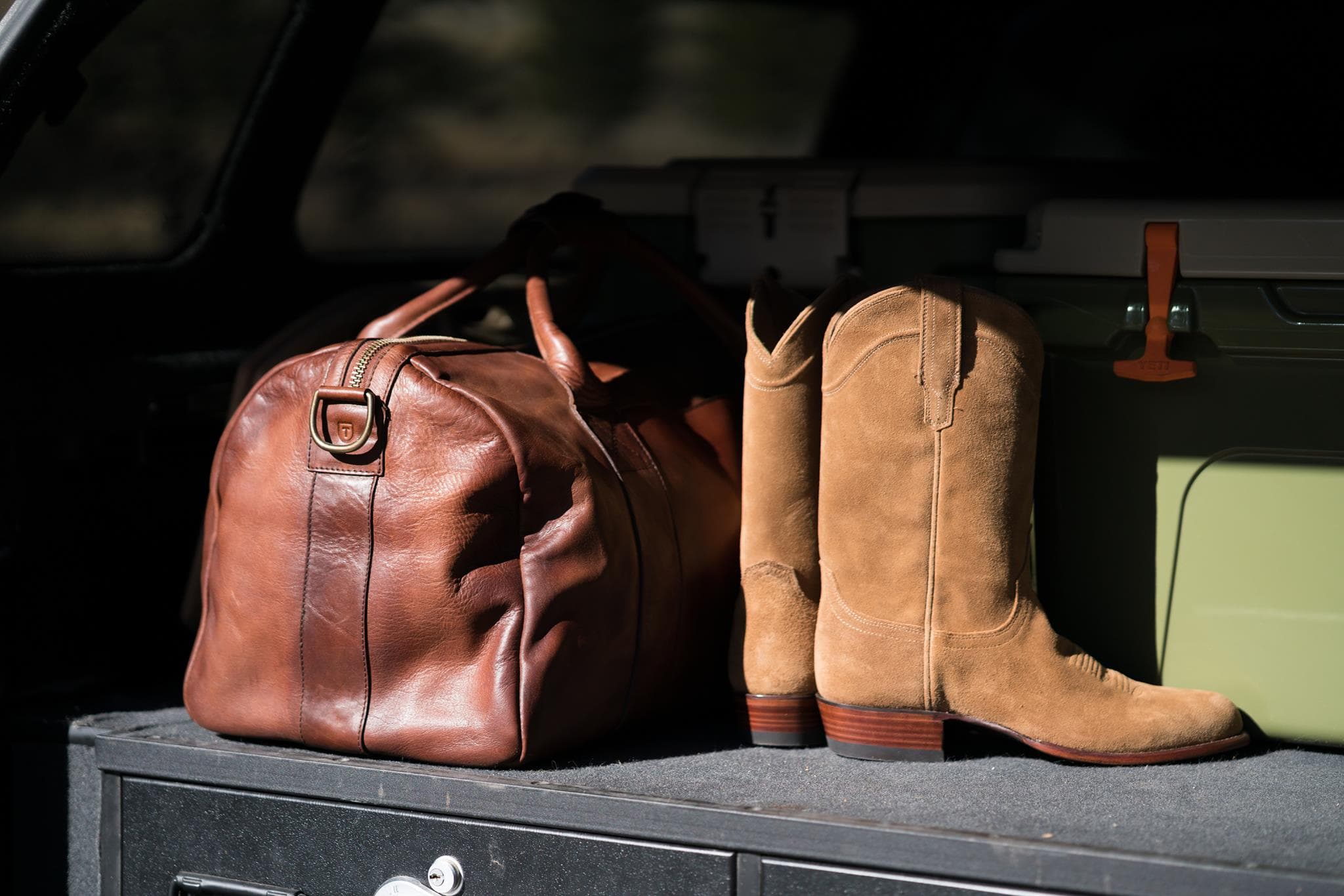
Tecovas is a direct-to-consumer western boot and apparel brand that rebuilt how cowboy boots get bought online. Quality craftsmanship, a no-middleman model, and a confident brand voice had pulled in a fast-growing, fiercely loyal customer base.
When Tecovas brought us in, the goal wasn't more noise. They needed someone to find where the site could work even harder for their customers. We started with moderated user research, turned what we heard into a prioritized opportunity map, and partnered with their ecommerce team to begin a structured testing program focused on the parts of the funnel with the most room to grow.
The impact
With a brand growing as fast as Tecovas, the temptation is always to ship more variants faster. We pushed in the other direction first. Twenty customer conversations gave the team a map of where the site could serve customers better, and every test we ran after that pointed at something a real person had told us.


The challenge
Tecovas had scaled fast on product, brand, and word of mouth. The on-site shopping experience hadn't been studied at the same pace, and there were real questions about which parts of the funnel were holding customers back.
Product pages, sizing guidance, and navigation were doing critical conversion work, but had never been put in front of real customers in a structured way. The team needed evidence, not opinions, to know what to change first.
Internally, there were plenty of hunches about what to fix. What was missing was a way to compare them, score them, and decide together where to start.
The approach
We conducted twenty fifty-minute moderated interviews with three groups: customers new to western boots, customers new to Tecovas, and returning Tecovas owners. We followed each person through their own shopping journey rather than handing them a script.
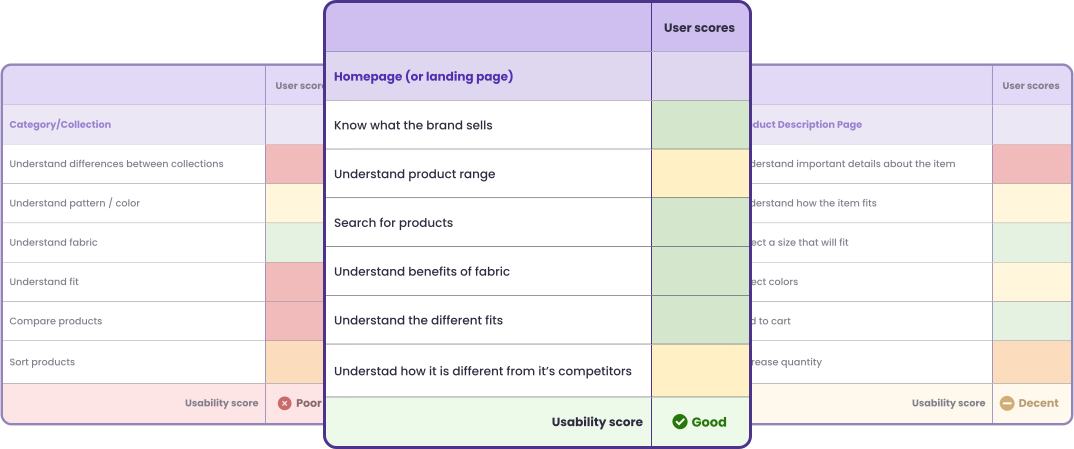
We synthesized the recordings into a small set of clear themes: homepage overwhelm, sizing confidence, product findability, checkout friction, and payment transparency. Each one got a severity rating so the team could see, at a glance, where the most painful moments lived.
Twenty-two specific opportunities were plotted on a value-vs-complexity matrix. Easy wins, strategic initiatives, and lower-priority ideas were named individually so the team could decide together where to spend hours next.
From there we moved into the work itself: a navigation card sort with real shoppers, a boot discovery questionnaire, scoping for a guided boot finder, and a structured A/B testing program against PDP, cart, and shipping. Every initiative traced back to a finding in the original research.
What we learned
It's tempting to jump straight to variants. For a brand growing as fast as Tecovas, the higher-leverage move was building a clear plan first: deciding which problems were worth testing, and in what order, before any test went live.
Once each finding had a priority attached, internal debates about 'what should we work on next' got shorter. The team could point at the matrix instead of arguing from instinct.
The same twenty interviews informed navigation work, sizing copy, the boot quiz scope, and the testing roadmap. Good research isn't a one-time deliverable, it's the source material the whole program runs on.
The results
Before any A/B test ran, Tecovas had a prioritized map of where the on-site experience could improve, sourced directly from twenty customers across three shopper segments. That map became the spine of the testing roadmap: navigation, sizing confidence, product discovery, and the post-PDP path each became its own line of work, with research as the receipt for why.
The takeaway
The biggest gain wasn't a single winning test. It was a clear, research-backed plan for where to focus first.
Frequently asked
We started with moderated user research, then translated those findings into a prioritized opportunity map and a structured testing roadmap. From there we ran a nav card sort, designed a boot discovery questionnaire, scoped a guided boot finder, and partnered with the Tecovas ecommerce team on A/B tests covering navigation, PDPs, cart, and shipping.
For a brand growing as fast as Tecovas, the highest-leverage move wasn't running more tests, it was making sure every test was aimed at a friction point a real customer had actually flagged. Research up front meant the testing roadmap was already pointed at problems worth solving.
Twenty moderated interviews across three shopper segments: customers new to western boots, customers new to Tecovas, and returning Tecovas owners. Each interview followed the customer through their own shopping journey on the live site rather than a scripted task list.
Modern Home & Living
A CRO program scored on what a lead was worth, not just how many came in
Read case study
Sports & Recreation
Building a conversion program that respects what shoppers already know.
Read case study
Beauty & Wellness
Their redesign was ready. We helped them know it would land before they pushed it live.
Read case study